By: Hannah Hesford | June 11, 2026
We get asked all the time by our guests: how do you find such brilliant local partners? And the truth is, the story is different for every retreat. Some come through years of friendship, some through a personal recommendation, most through a lot of digging and midnight Google rabbit-holes. This one was a new one, even for us.
Jools had been watching this company pop up on Instagram for ages. Then, last year, they ran a promotion of their signature photo tour of Kyrgyzstan, and she took it as her cue to get in touch. Not to enter, just to say hello: we run retreats in wild places, we love what you’re doing, can we have a chat? (Or words to that effect)
No reply came. Weeks turned into months, and we’d pretty much forgotten all about it. Then earlier this year, an email! They remembered us. Would we like to come and see Kyrgyzstan for ourselves?
Er, YES PLEASE! We were deep in 2027 retreat planning mode, so the timing felt like a sign. We booked the flights, obviously.
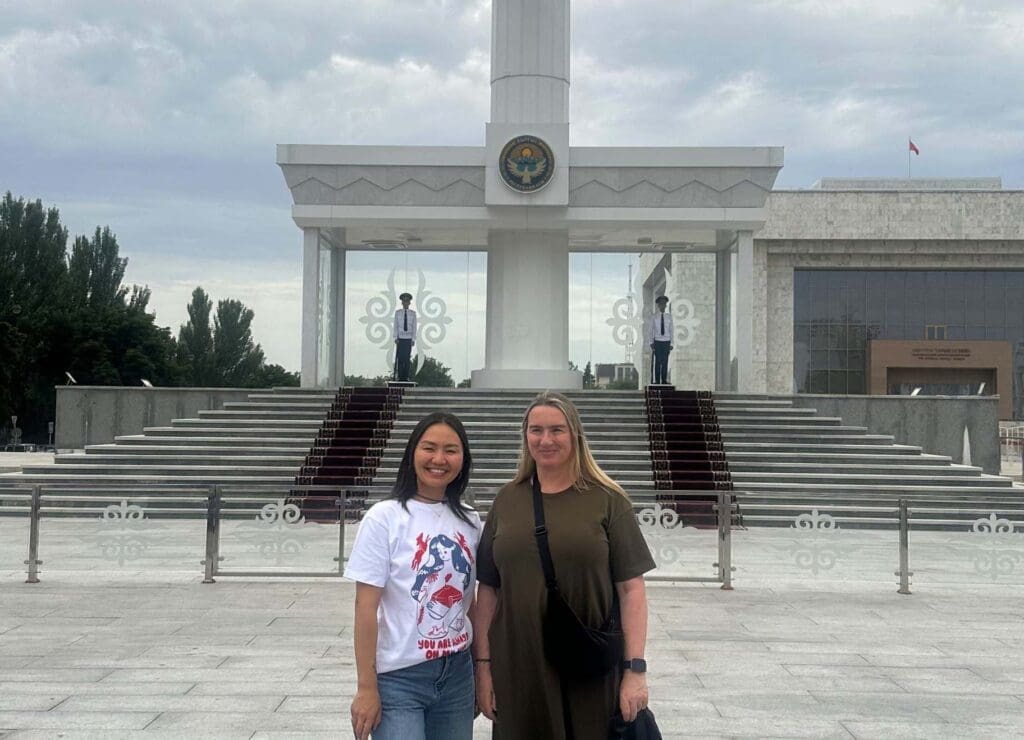
Two women running the show
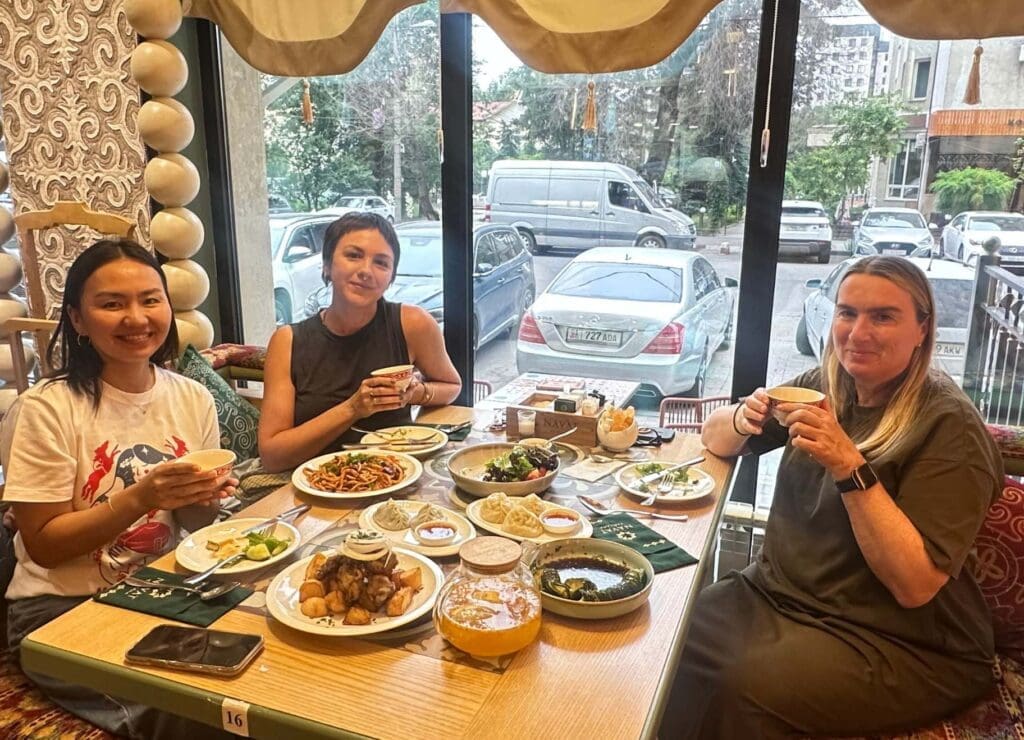
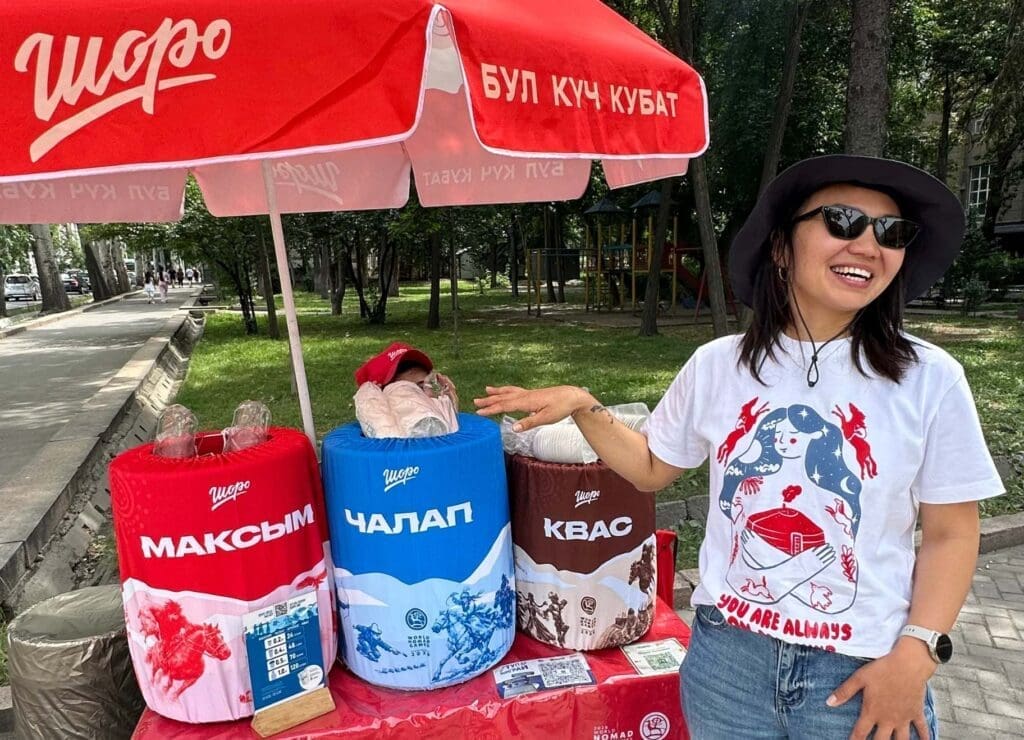
The company was built by three founders, but the two running the operations, and the two we’ve been working with from that first email, are Bermet and Zhanara. Now, being a women-founded business ourselves, we’ll always make a beeline for other women-owned businesses. So discovering that the people running the show in the Kyrgyz mountains were two entrepreneurial (and quite frankly, badass) women? A very good sign, and we hadn’t even packed a bag yet.
But you can’t tell from emails whether a partnership will actually work. You have to show up. So off Jools and I went.
A week in the car with Zhanara
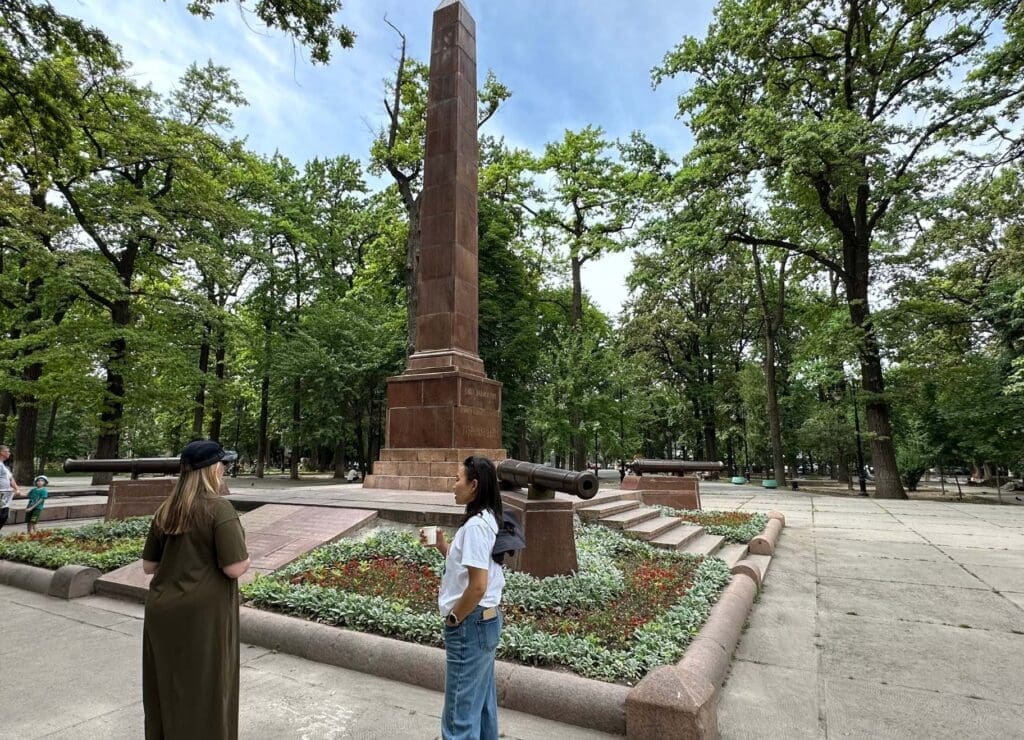
Zhanara, one of the company’s CEOs, didn’t hand us over to someone else. She met us in Bishkek and looked after us herself, all week, starting with a city tour that was our crash course in Kyrgyzstan: a young country with a long history, still working out its identity since the collapse of the Soviet Union. You can see it all over the city. Mostly in monument form. There are a LOT of monuments. So many, that “oh look, another monument!” became the first running joke of the trip.
Then we hit the road: Bishkek to Issyk-Kul, on to Song-Kul lake, through the Chon Kemin valley and back to Bishkek, with Zhanara driving the whole way. That’s a lot of hours on mountain roads together, and by day two it had stopped feeling like a work trip. It felt like a road trip with a friend. A friend who happens to know everything about her country, and who can’t help sharing the life behind it: the memories, the people, and a dream of showing more of the world what Kyrgyz life is really like.
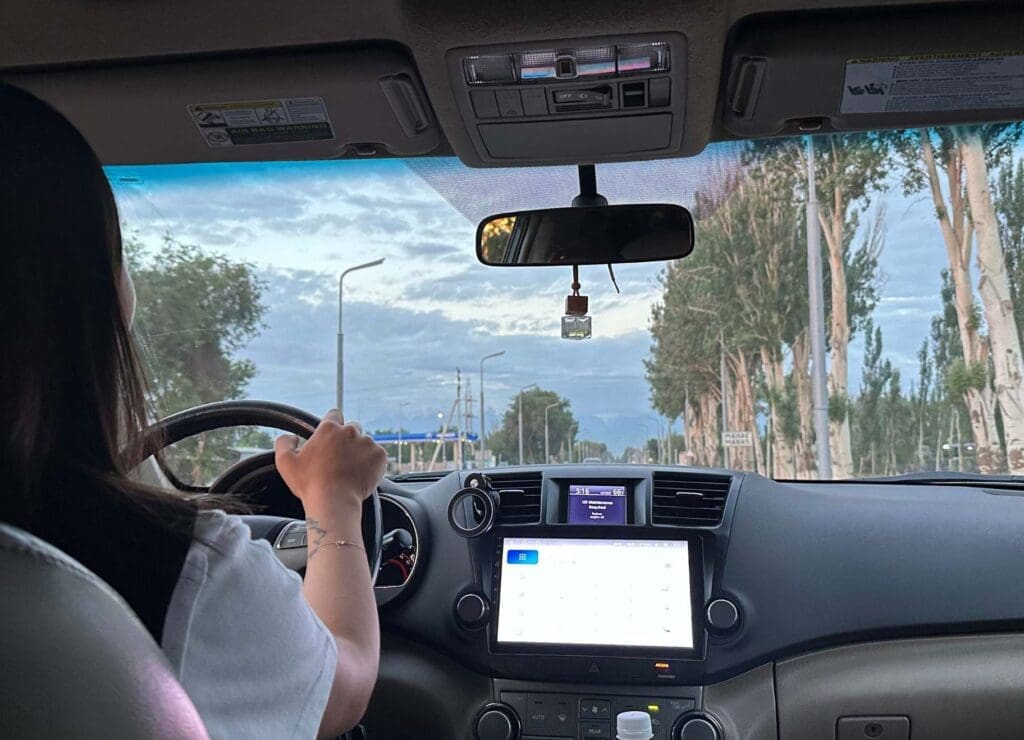
She told us about her childhood along the way. Summers spent at Son-Kul with her grandparents, the same lake we were driving towards. The places she now shares with travellers are the places she grew up in, and when she talks about them you can tell, none of it is a script.
The pizza surprise
One day we stopped for lunch in Kochkor, Zhanara’s home town, on the way up to Son-Kul. Zhanara pulled up outside a pizza restaurant, called Syrduu. We sat down, scanned the menu, got slightly overexcited (and a little dribbly) at the prospect of a woodfired pizza, which was a welcome change-up from the usual hearty Dimlamas (AKA Kyrgyz stews) we’d been working through all week.
“Yeah, so this place is actually mine,” Zhanara dropped in. Casually. As you do.
She’d returned to her home town during covid, a familiar story the world over, and decided to open the restaurant while she was there. Somewhere locals and travellers alike could enjoy a proper woodfired pizza and other western dishes. Over lunch we talked about the menu, the realities of running a small business, and her plans to give the place a revamp. Her mum was in the kitchen, so we said hello to her too. And the pizza was every bit as good as we’d hoped.
We spent the rest of the drive wondering what other surprises she had up her sleeve.
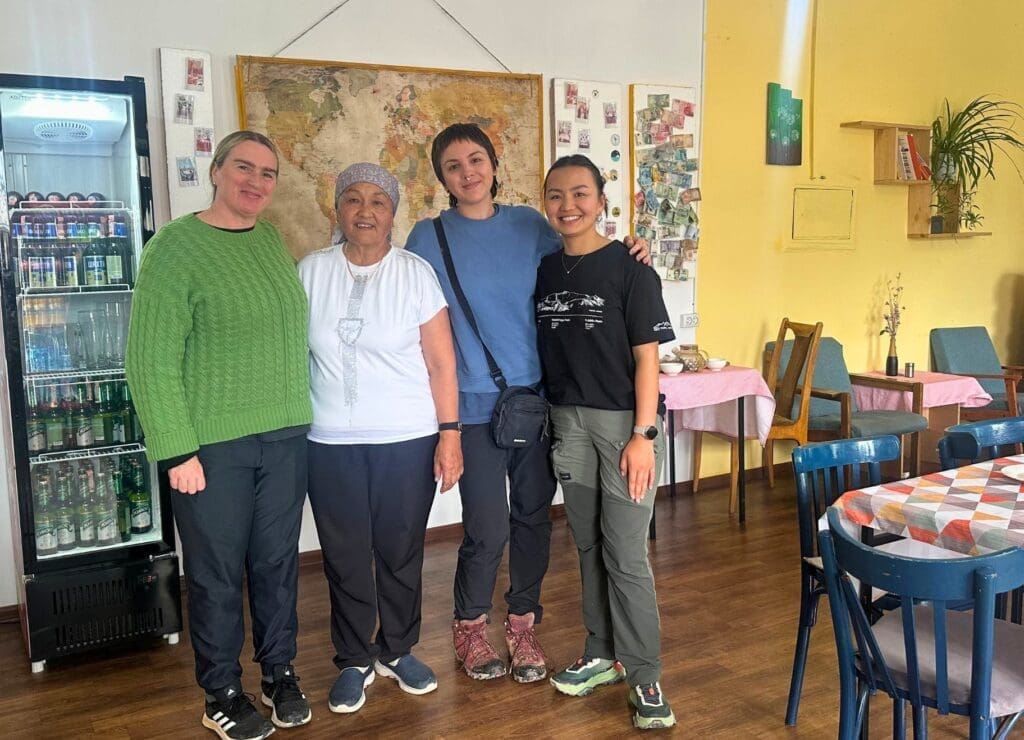
It summed up something we’d been feeling all week. Zhanara seemed to be part of a new wave of strong-minded female entrepreneurs in Kyrgyzstan, women building businesses on their own terms in a country that’s changing fast and busy redefining itself. Getting to work with her, and with Bermet, is one of the most exciting things about this whole adventure.
The horse ride that sealed it
We knew we’d like them. What we hadn’t bet on was just how closely their way of working matches ours.
They invest in their guides, putting real time into training and development so people can feel empowered, and grow with the company. They work with family-owned businesses and nomadic families across the country, and not just as suppliers: as collaborators, swapping ideas and shaping special experiences for guests together. The kind of partnership where everyone has a stake in how good it is. And none of this came from a brochure or a sales chat. We watched it happen, everywhere we went.
And then there was Erland. One afternoon at Son-Kul, Zhanara took us over to another local camp for some horse riding — and happily, we were dressed for it: a few days earlier she’d taken us on a quick shopping spree at the market in her home town and, the three of us, had come away with traditional Kyrgyz boots to ride in. The riding was always on the itinerary. What wasn’t in the plan was the camp itself winning us over the way it did. Within minutes of arriving we knew: this was the Reclaim vibe. A family-run camp, simple and full of charm, and you could tell straight away how fond Zhanara and the family were of each other.
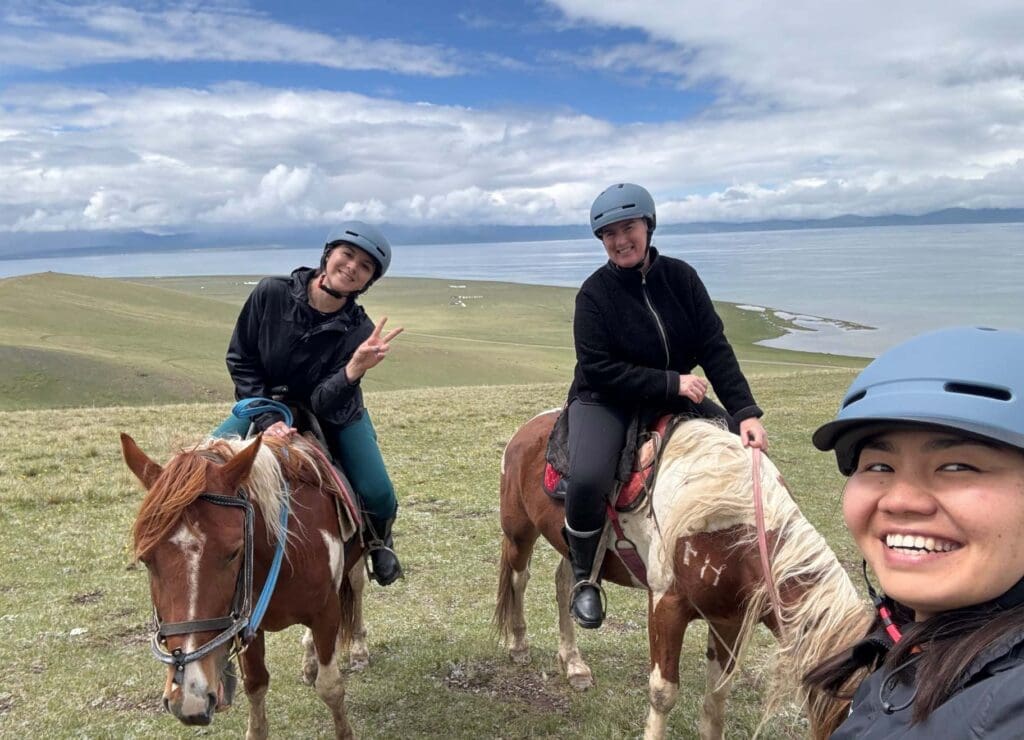
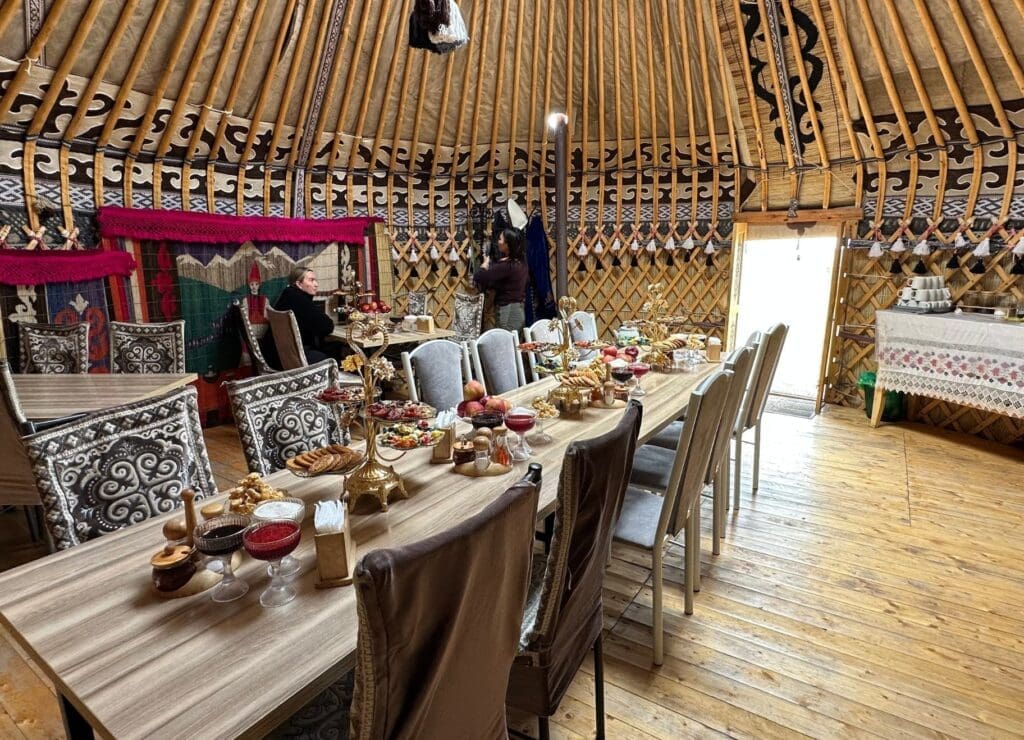
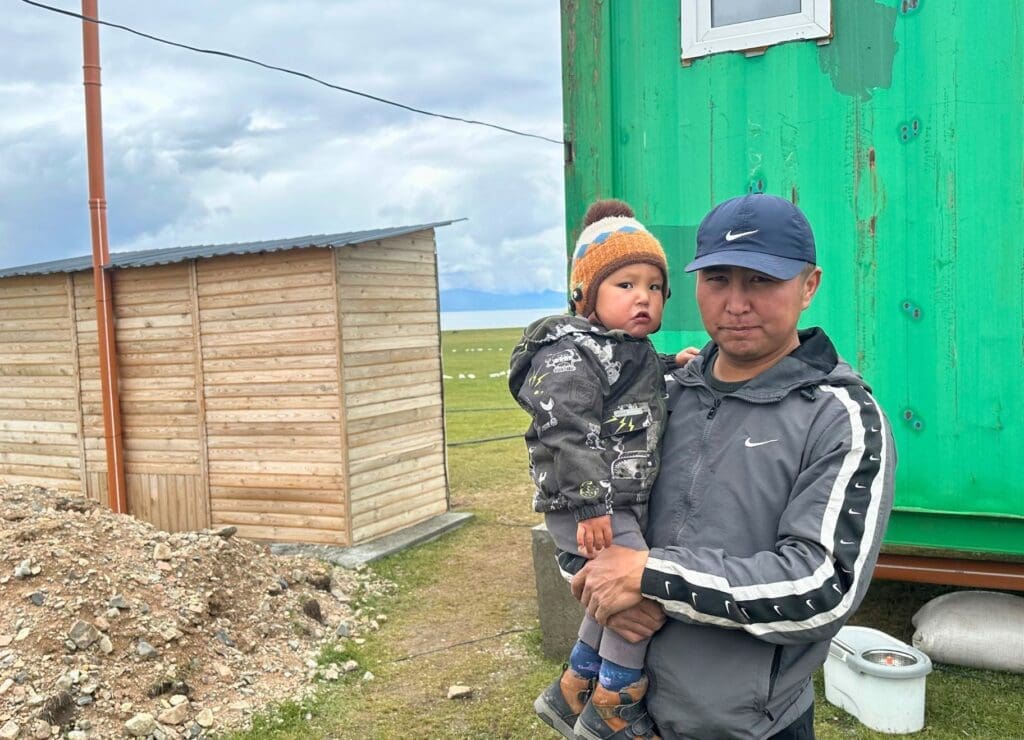
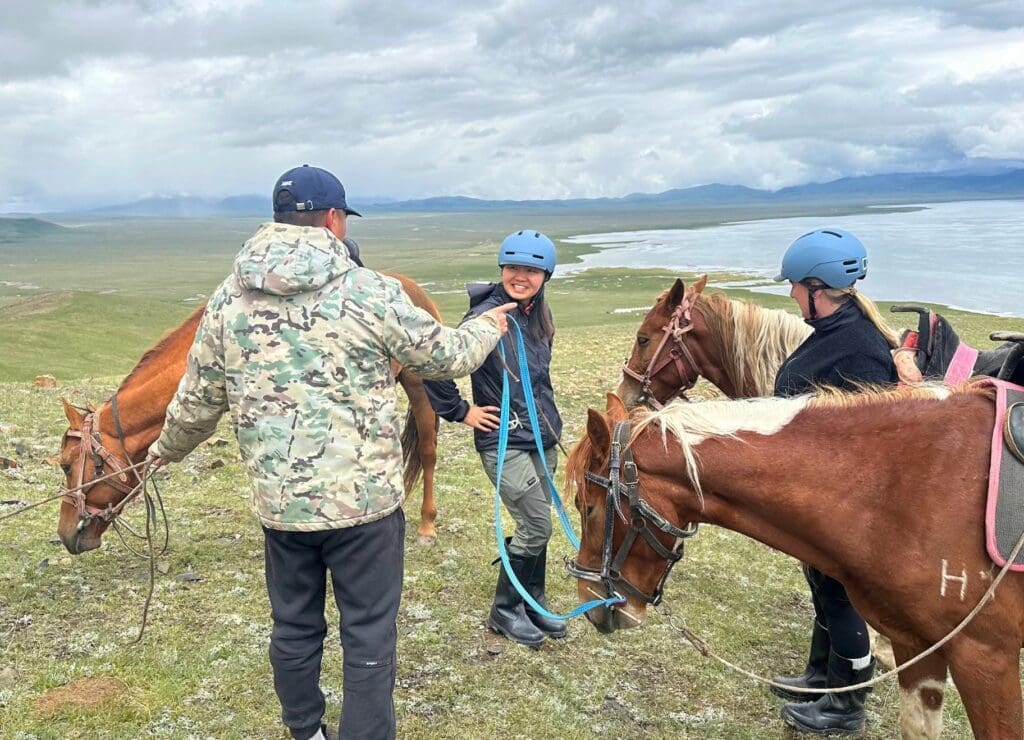
It was on that first ride that we asked Erland his story. How he came to run his own camp. How he met his wife (the traditional Kyrgyz route involves something called “girl chasing”, which is exactly what it sounds like: catch her on horseback, win a kiss. We’ll let you Google the rest). How he raised his family, and what he dreams of building at Son-Kul. Listening to him talk, somewhere on horseback in the middle of all that space, was the moment we knew this was something we wanted to be part of.
Later that day, Jools, Zhanara and I found ourselves in the steam room back at camp. And when we say steam room, picture a little wooden shed with two water tanks: one heated by a wood fire, hot stones stacked on top doing the steaming, the other full of cool water with ladles for when you need rescuing. No spa menu, no fluffy robes, completely brilliant. We were still buzzing from the ride and hatching plans. Not just for a retreat, but for a proper collaboration: something new and exciting we’d create together, rewarding for everyone involved, with our guests’ experience as the compass.
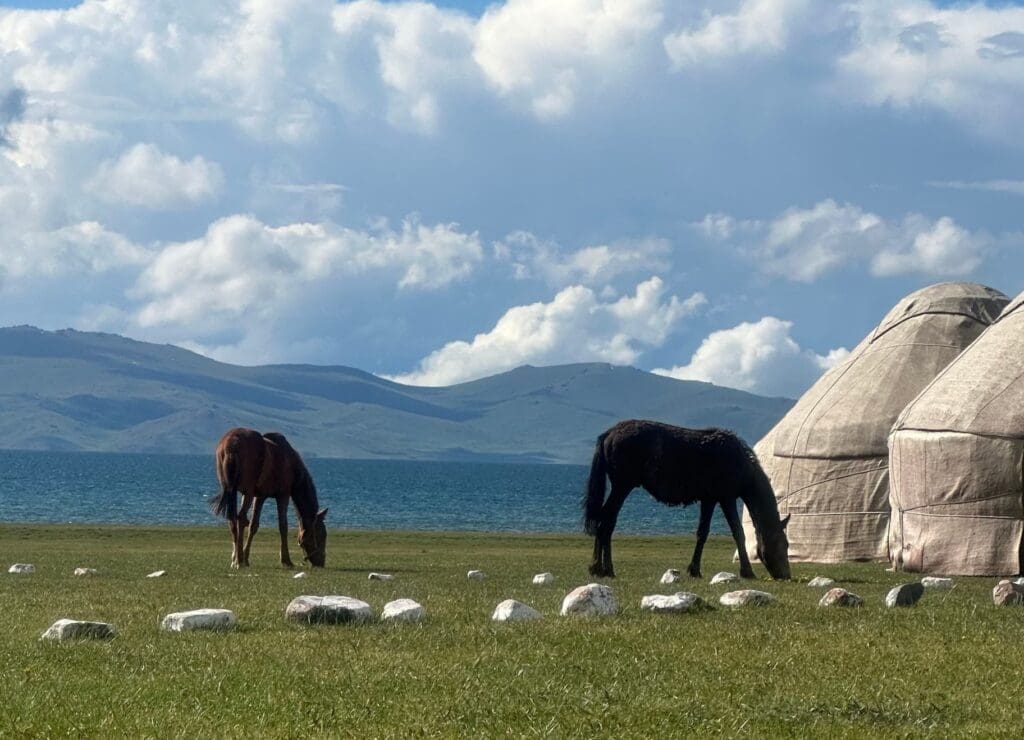
Afterwards we sat drinking sea-buckthorn tea, the three of us in a comfortable silence. The lake shimmering, the hum of insects, a horse plodding past. Zhanara must have read our minds.
“This is my happy place,” she said.
We nodded. That moment will be hard to beat.
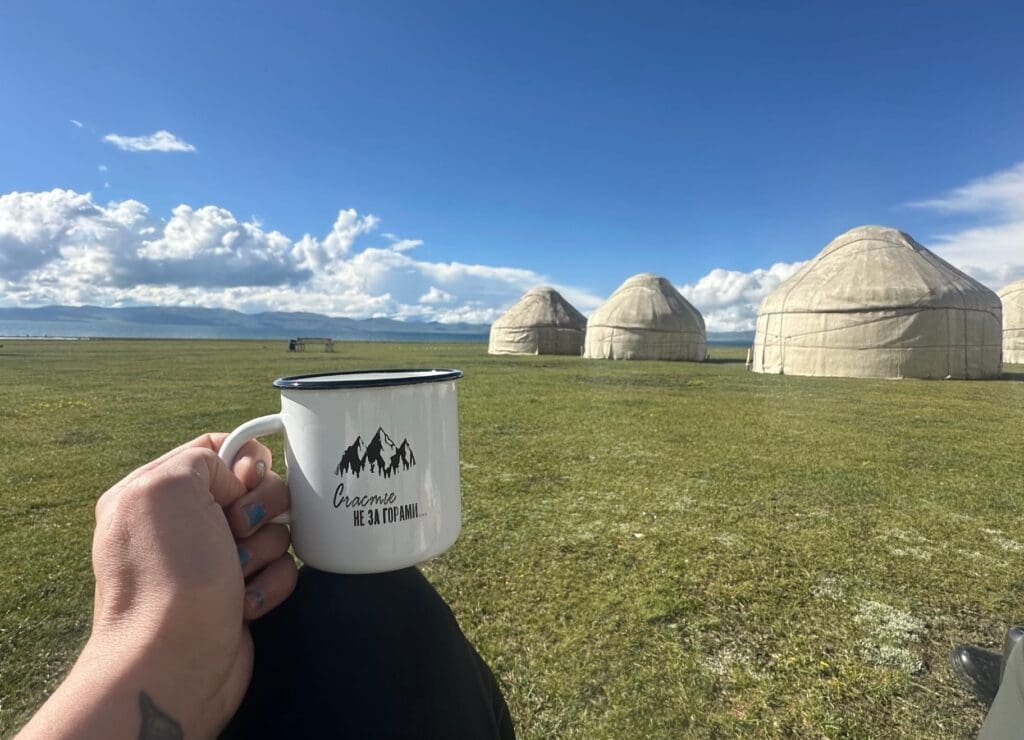
Seeing it all through her eyes
On the road down from Son-Kul, Zhanara wanted to stop and pick up some homemade mare’s milk from a nomad family. Which, of course, meant we were invited in. That’s how it works there. And sitting in that yurt, it hit us properly: everything we were experiencing, we were experiencing through Zhanara. Her words, her translations, and her face, because so much of this was woven into her happiest childhood memories, and you could see it light up in her as we went.
She taught us little things too. That waistcoats are called ‘lung-covers’, because that’s, well…what they are! And what her grandma always said: put your lung-covers on before you go out. That “chong kyz” means young ladies and “chong jigit” young men. And that there is never, under any circumstances, a bad time for a cup of tea.
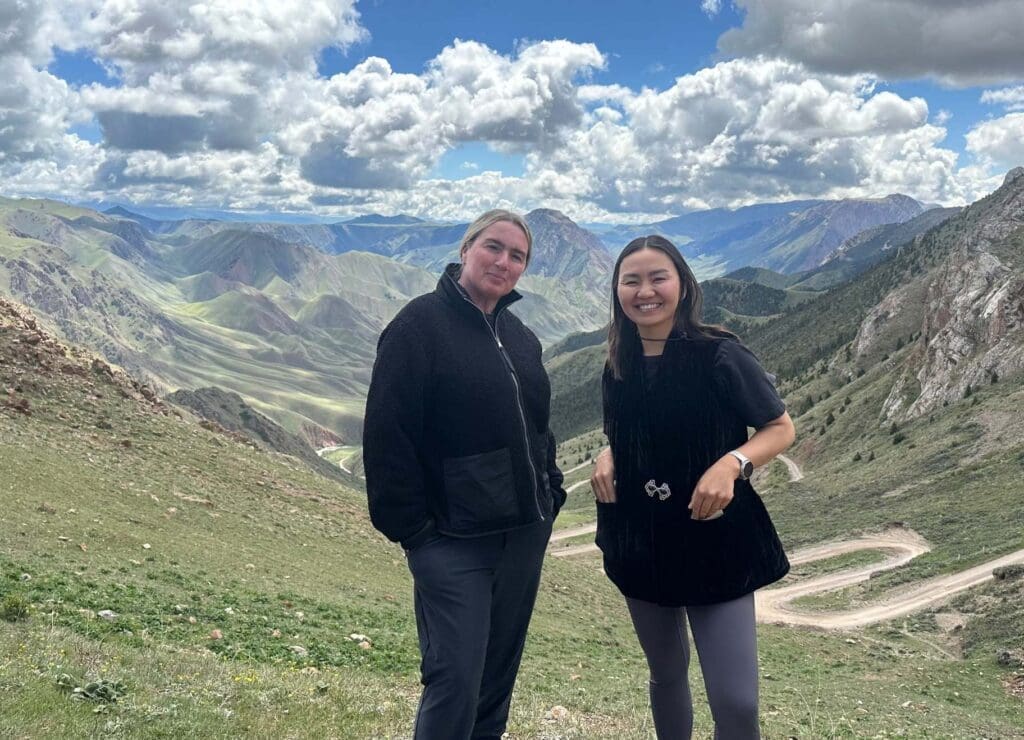
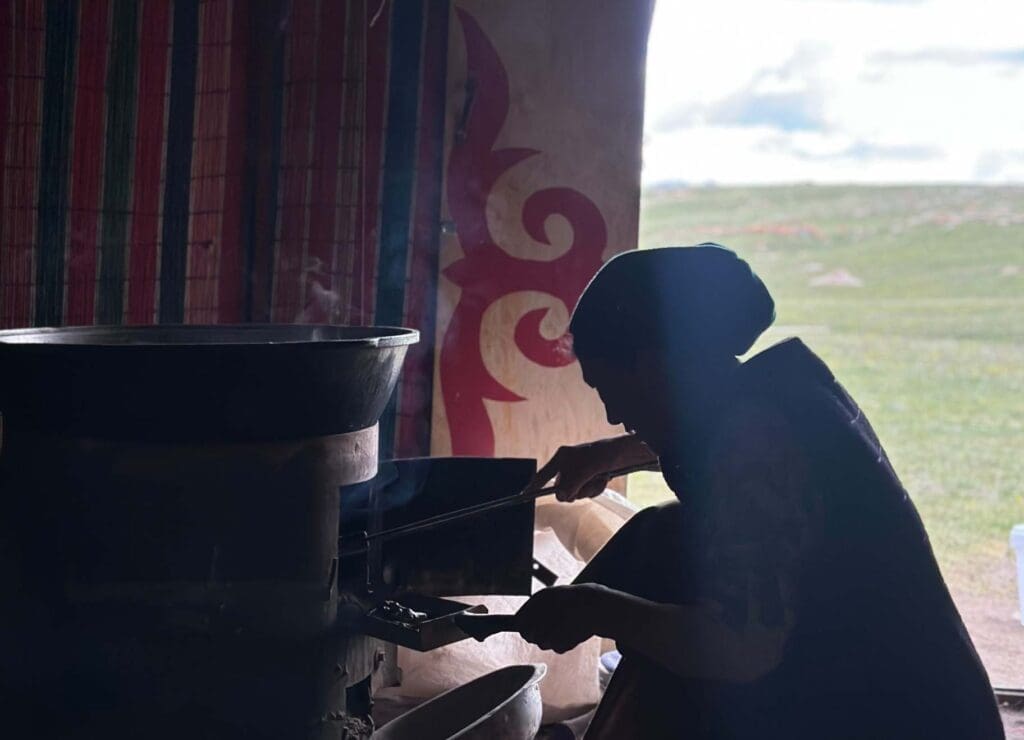
Towards the end of the trip, we sat down to ask Zhanara a few questions. “Don’t be surprised if I start to cry,” she warned us. Spoiler: she did. And we understood completely. Kyrgyzstan has lived through so much change, and there’s more coming all the time. But the constant seems to be the kindness of its people. It runs through the country like a vein: in the smiles, the friendly hellos called across the street, the way you’re waved in for a cuppa. Even a week of it leaves a mark on you.
Maybe that’s why the week unfolded the way it did. All that openness went in both directions: with every conversation, Zhanara was getting a clearer picture of what Reclaim does and why we do it, just as we were falling for how she does things. By the end of the week it didn’t feel like vetting a supplier. It felt like the start of something we’d be building together.
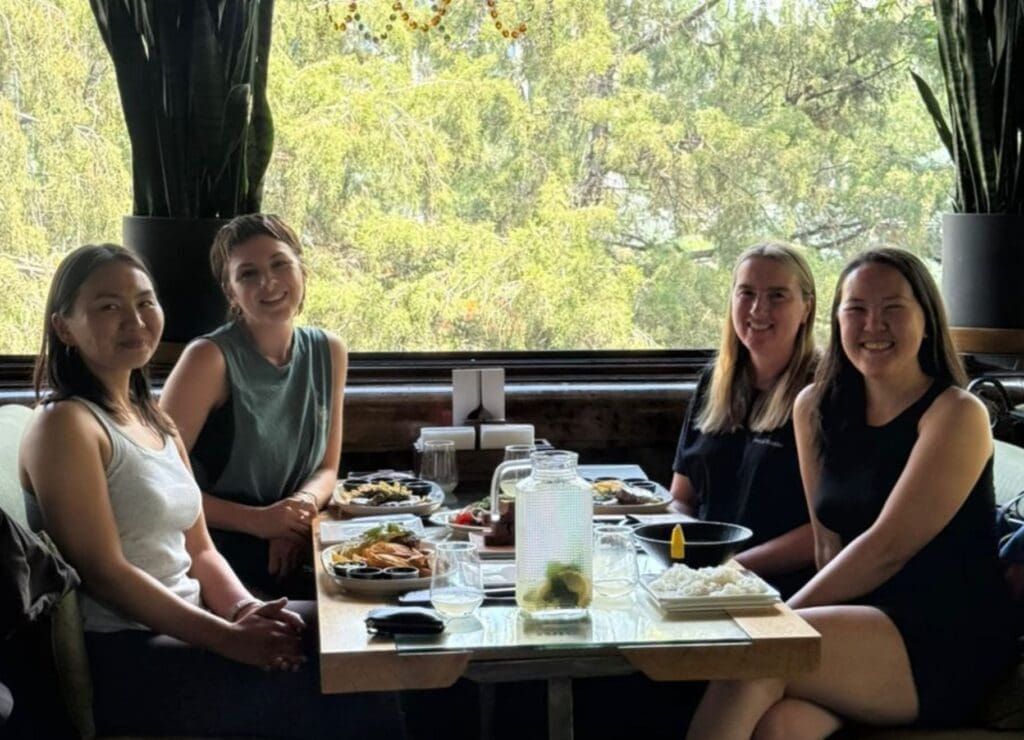
On our last day we finally met Bermet, the woman who’d been organising the whole adventure from behind the scenes. A year on from that contact form, sitting around a table with the two of them, it was hard not to grin at how it had all come together.
This is how we do things
Why are we telling you this? Because this is the part of retreat planning nobody sees (we’ve written before about how we choose our retreats, and this is what it looks like in practice). Long before there’s a beautiful itinerary, there’s often a week like this one: sitting in someone’s car, eating in someone’s restaurant, listening to someone’s story, finding out whether you see the world the same way. We don’t run retreats anywhere we don’t have people like Bermet and Zhanara on the ground. A place like Kyrgyzstan only works with people who know it, love it, and want it to be seen properly.
So no, we can’t share the details of a Kyrgyzstan retreat just yet (believe me, we’re itching to). But when we waved our goodbyes to Zhanara at the end of the week, after seven days of budding business and, we think, friendship, we all said the same thing: the next time we see each other, it’ll be on a retreat… in our happy place.
We’ll be sharing more soon. If you’d like to be among the first to hear, join our early bird list here.
Watch this space.
Hannah x