
By: Hannah Hesford | February 16, 2026
There are places you go on holiday. And then there are places that properly reset something in you.
Okinawa falls firmly in the second camp.
These subtropical islands in southern Japan are famous for long lives, strong communities, and a slower pace of living. Throw in coral reefs, white-sand beaches, forest trails, and a way of life that prioritises being outdoors and spending time with people — and it becomes pretty clear why Okinawa lends itself so naturally to wellness travel.
Here’s why we think Okinawa is one of the world’s most inspiring wellness destinations — and why it works so beautifully for a yoga retreat.
1. You might’ve heard of the Blue Zones
Have you heard of the Blue Zones? These are places dotted around the world where people regularly live well past 100, staying healthier for longer. Okinawa is one of them. In fact, it’s one of the original five – sitting alongside Sardinia, Nicoya (Costa Rica), Ikaria (Greece), and Loma Linda (California).
In Okinawa, it’s normal to meet people in their 90s — and even 100s — who are still active, independent, and deeply involved in family and community life.
Researchers point to a combination of things: a largely plant-based diet, daily natural movement, strong social ties, and a clear sense of purpose (known locally as ikigai).
There isn’t one single secret. It’s lots of small, steady habits layered over time. And when you spend time here, that all starts to make quite a bit of sense.
2. Simple, slow living
A few days in Okinawa, and you start to realise just how fast you’ve been buzzing along. Life here feels more slow and elemental.
Sea. Salt. Sunlight. Food. People.
Mornings usually begin outdoors — walking along the coast, tending gardens, stretching lightly before the day warms up. Gentle movement is just part of daily life.

Homes are simple. Days unfold without much rushing. People grow food, walk to see friends, spend time outside, and share meals because that’s simply how life works here. They even have words for this rhythm. Uchinaa time refers to the island’s relaxed pace. Nankuru nai sa roughly means “things will work out.” Both feel very in step with the place.
There’s also the word nuchigusui — “medicine of life” — used to describe the everyday things that nourish you: food, friendship, time outdoors.
If you’re used to packed calendars and always being “on”, this way of living feels like a proper reset. A relief, even. You realise how much of your usual pace is optional.

3. Awe, built into the landscape
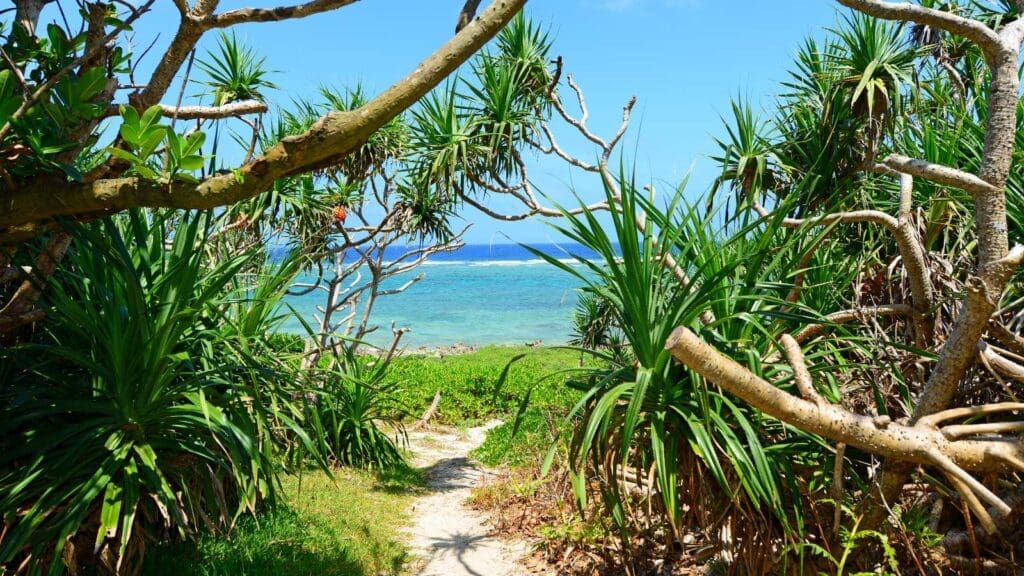
This is where Okinawa really shines. White-sand beaches, warm turquoise seas, coral reefs alive with colour, dense forests and rugged coastlines — it’s the sort of place where you head out for a quick swim and somehow lose half a day.
You might find yourself floating above luminous reefs off Ishigaki, canoeing through quiet mangroves on Iriomote, or lying back under some of the clearest night skies you’ve ever seen. Travel north and the energy shifts again — forested hot springs, sacred shrines, and guided walks in the foothills of Mount Fuji. It’s a sensory journey as much as a geographical one.

Somewhere along the way — drifting above coral while tropical fish pass by, walking jungle paths, watching stars fill the sky — you realise your shoulders have dropped a few inches.
There’s a real awe factor to being in places like this. It sneaks up on you. You slow down. You notice more. You feel small in a good way. That sense of awe does something. It pulls you into the present. It softens stress. It reminds you how extraordinary the world still is.
4. Purpose, connection, and belonging
One of the most interesting things about Okinawa isn’t just how long people live — it’s how connected they remain. Community really is the lifeblood here.
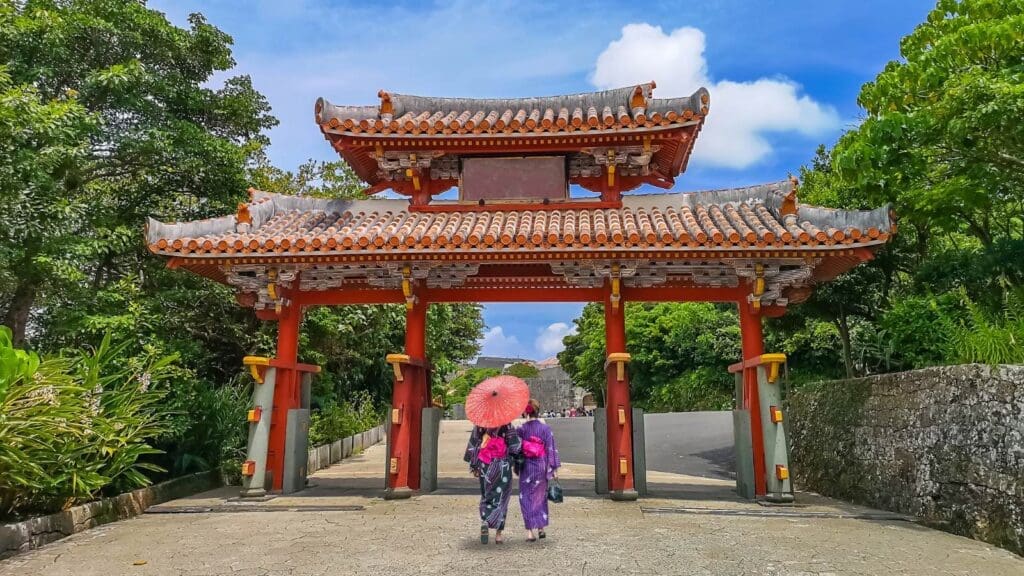
There’s a strong cultural emphasis on purpose (ikigai) and mutual support. Elders are valued. Everyone has a role. Community feels alive small, everyday ways — nothing formal, just people looking out for each other. There’s even a word, yuimaru, meaning mutual aid — helping each other because that’s simply how things work. And another phrase, ichariba chodee, which translates to “once we meet, we’re family.”
It’s a reminder that wellbeing isn’t just physical. It’s shaped by place, rhythm, and people — built slowly over time.
Feeling useful. Feeling connected. Having purpose. Being part of something bigger than you. That kind of foundation changes how you age — and how you live. And being somewhere that genuinely values those things is a pretty powerful reminder of what’s worth carrying home with you.

5. Food that tells the story of the islands
If you really want to understand Okinawa, start with what’s on the table.
Modern Okinawan cuisine has roots in the days of the Ryukyu Kingdom, when these islands were a trading hub linking mainland Japan, China, and Southeast Asia. Ingredients and techniques travelled across the sea and blended with local produce and fishing traditions.
There’s even a word for that spirit of blending: champuru — meaning “to mix” or “to fuse.”
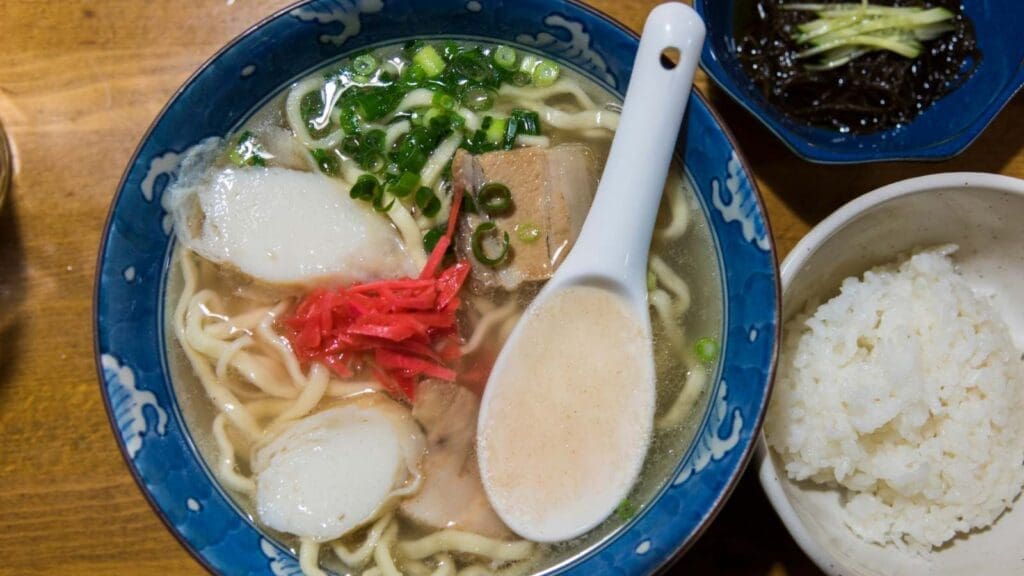
Meals tend to centre around sweet potato, tofu, seaweed, bitter melon, fresh fish — seasonal, unfussy, and prepared with care. It’s not about spectacle. It’s about balance, nourishment and sharing.
Eating here feels connected to land and sea. Some flavours might be unfamiliar at first — but that’s part of the fun, isn’t it? You’re not just eating a meal, you’re getting a small taste of the islands themselves.
6. It’s not the Japan you expect
When most people think of Japan, they picture neon cities, bullet trains, busy crossings, and the big headline sights. Okinawa feels like a completely different side of the country.
On islands like Ishigaki, life unfolds in small coastal villages where wooden houses sit close to the sea, fishing boats bob offshore, and jungle edges right up against the beach. It’s quieter. Saltier. Less polished. Time stretches a little.

Then, just when you’ve settled into island life, everything shifts again. Travel north and you find forested hot springs, sacred shrines, and mountain trails beneath Fuji’s shadow — a slower, more contemplative energy rooted in nature and ritual.
Tropical islands and sacred peaks. Ocean days and forest evenings. It’s that contrast — moving between very different landscapes and ways of being — that makes Okinawa such a powerful place to slow down and reconnect.
Why Okinawa works so well for a yoga retreat
This is exactly why we chose Okinawa. Because yoga here isn’t just about asana — it weaves through the whole journey. The sea dips. The starry skies. The sound of the jungle. Taking a minute to properly marvel at this planet.
It’s about letting the awe and wonder of the place actually land with you on the mat, instead of rushing on to the next thing. That’s what our wellness adventures are about. And we can’t wait to share this one with you.
Join us in Okinawa
If you’re feeling the pull, you can find out more about our Okinawa retreat — or drop us a message if you’d like to chat it through. We also offer payment plans if that helps.
Would love to share this one with you.